Maintaining commercial electrical safety Juab County requires business owners to adhere to National Electrical Code standards, which include ensuring proper grounding, GFCI protection in wet areas, and unobstructed clearance around electrical panels. Compliance also involves verifying that emergency exit lighting is functional and that all wiring methods are appropriate for the building's specific occupancy and use.
For a business owner in Juab County, electrical issues are more than minor inconveniences; they represent significant liability risks and potential operational downtime. Whether you are operating a retail space in Nephi or a manufacturing facility near Mona, maintaining code compliance is the foundation of a safe and profitable enterprise. Navigating the complexities of commercial electrical standards can feel overwhelming, especially when trying to differentiate between residential shortcuts and heavy duty industrial requirements. This guide provides a practical roadmap for local entrepreneurs. You will learn about the most frequent code violations we encounter, the vital differences between commercial and residential wiring materials, and the specific safety protocols required for industrial spaces. By understanding these essential benchmarks, you can protect your property and ensure your business remains fully compliant with Utah state regulations.
The High Stakes of Commercial Electrical Safety in Juab County
Managing a business in Nephi, Mona, or Eureka requires a different level of oversight than maintaining a home. Commercial electrical safety Juab County is not just about keeping the lights on; it is about protecting a significant investment and ensuring public safety. Unlike residential systems that typically operate on single-phase 120V or 240V power, commercial facilities often utilize three-phase power and higher voltages to handle larger loads. This technical complexity demands reliable commercial electrical services to avoid the severe consequences of a system failure.
A residential outage is usually an inconvenience, but a commercial failure carries much higher stakes. Business owners face potential OSHA fines, massive revenue loss during downtime, and the heightened risk of catastrophic fire in high-density areas. As Juab County experiences rapid growth, many entrepreneurs are repurposing older buildings or moving into converted spaces. These historic properties often feature outdated wiring that does not meet modern Utah electrical codes. Before launching operations, business owners should contact an experienced electrician to evaluate if their infrastructure can safely handle the demands of modern commercial equipment. Failure to address these discrepancies early can lead to costly repairs or dangerous malfunctions once the business is fully operational.
Top 5 Common Commercial Electrical Code Violations
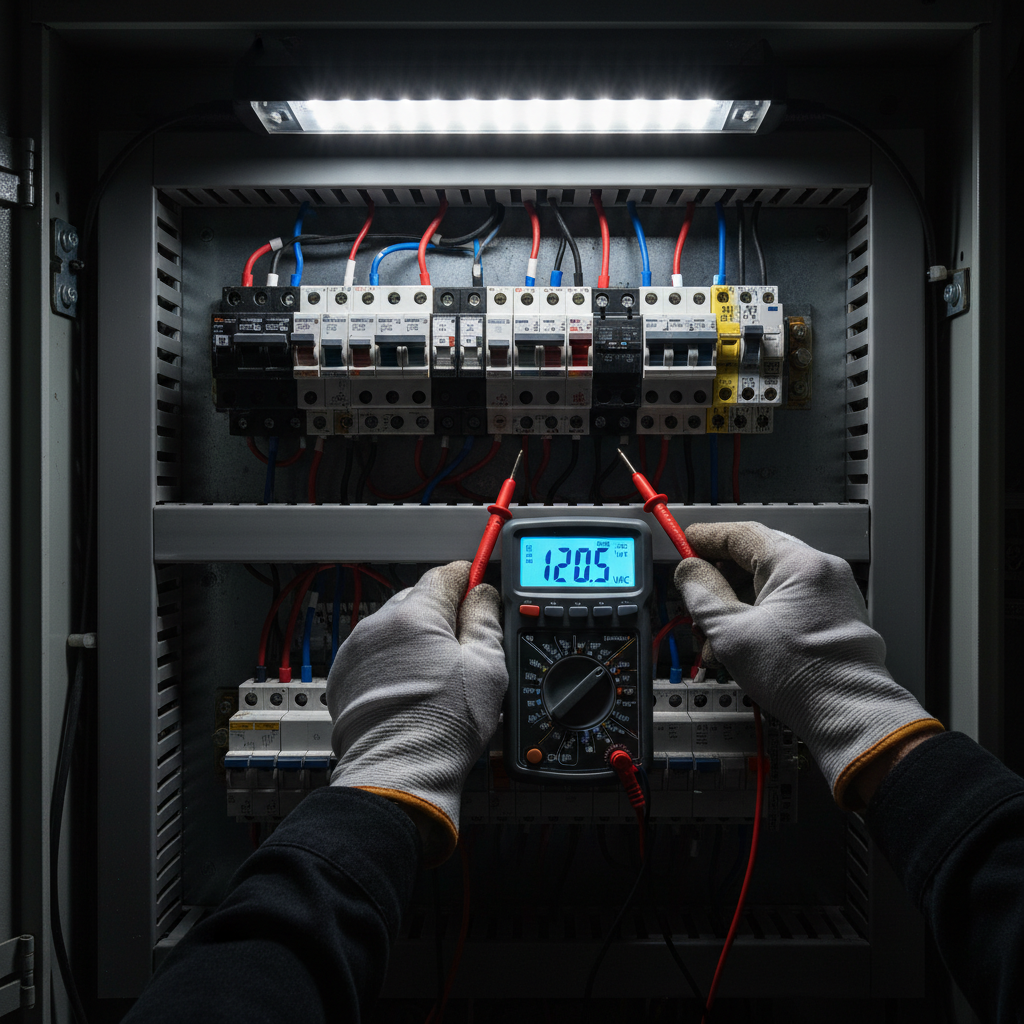
Identifying these common pitfalls early allows business owners to secure reliable commercial electrical services before a minor oversight becomes a liability. The National Electrical Code (NEC), which serves as the regulatory foundation for electrical work in Utah, outlines specific mandates that are frequently overlooked during the rush of daily operations or facility renovations.
Working Space Clearance: NEC 110.26 requires that electrical equipment have sufficient access and working space. For most commercial panels, this means maintaining a clear area that is at least 3 feet deep, 30 inches wide, and 6.5 feet high. Storing inventory, cleaning supplies, or pallet jacks in front of these panels is a significant violation because it hinders rapid access during an emergency or routine maintenance.
Improper Grounding and Bonding: In commercial environments handling higher voltages, grounding is the primary defense against electrical shock and equipment damage. Bonding ensures all non-current-carrying metal components are electrically continuous, while grounding provides a safe path for fault current to return to the source. If these systems are poorly installed or disconnected, it can lead to energized metal surfaces and catastrophic machinery failure.
Missing GFCI and AFCI Protection: Commercial kitchens, employee bathrooms, and shop areas in Juab County must have Ground Fault Circuit Interrupter (GFCI) protection to prevent electrocution in damp conditions. Furthermore, modern codes require Arc Fault Circuit Interrupter (AFCI) protection in specific areas to mitigate fire risks caused by arcing from damaged wiring or loose connections.
Improper Use of Extension Cords: The NEC is clear that extension cords are for temporary use only. Using them as a permanent substitute for fixed wiring is a common violation in offices and retail spaces. Cords should never be run through holes in walls, ceilings, or floors, nor should they be stapled to building surfaces. If a piece of equipment needs power, a permanent, code-compliant outlet must be installed.
Exit and Emergency Lighting: Safety codes require that emergency exit signs and path lighting remain illuminated for at least 90 minutes during a power failure. Non-functional backup batteries are one of the most frequent citations during local fire marshal inspections. Business owners should contact an experienced electrician to perform periodic load tests on these battery systems to ensure they will function during an actual emergency.
Commercial vs Residential Wiring: Why You Cannot Use Romex
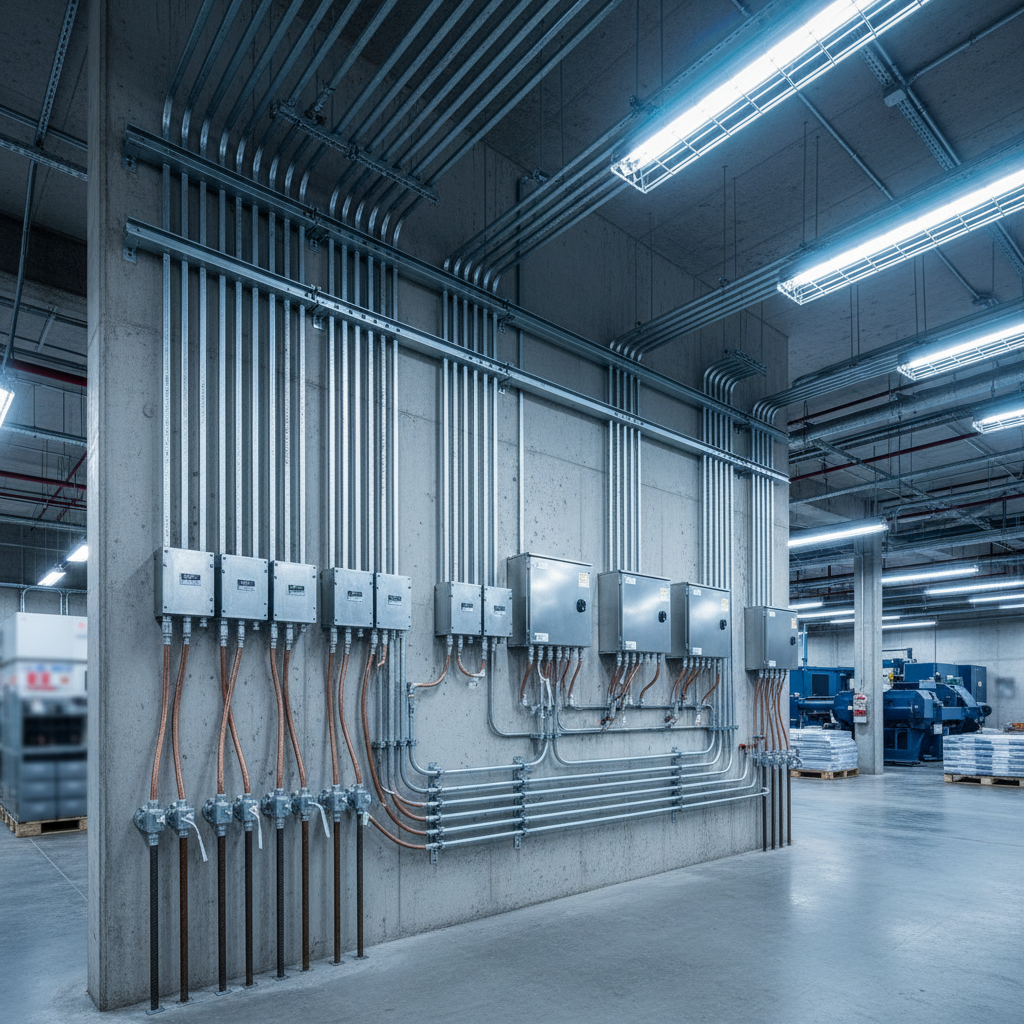
A frequent question business owners ask during a build-out is: "Are you allowed to run Romex in a commercial building?" In almost all commercial applications throughout Juab County, the answer is no. While Non-Metallic Sheathed Cable (NM), commonly known as Romex, is the standard for residential wood-frame construction, commercial buildings typically fall under different occupancy and construction classifications that mandate higher fire resistance and physical protection.
In a commercial setting, wiring is generally required to be housed in a metal raceway, such as Electrical Metallic Tubing (EMT), or installed as Metal-Clad (MC) cable. The primary reason for this requirement is fire safety. Commercial buildings often utilize non-combustible materials like steel studs and masonry; because NM cable has a combustible plastic jacket, it can contribute to smoke spread and fuel a fire within wall cavities. Furthermore, metal conduits provide superior protection against physical damage from heavy equipment, carts, or future renovations.
Transitioning from residential to commercial standards significantly impacts the scope of a project. Using conduit and MC cable increases material costs and requires more labor hours for precision bending, cutting, and securing metal components. Business owners must account for these technical requirements when budgeting for renovations. To ensure your facility adheres to local standards for commercial electrical safety Juab County, it is vital to contact an experienced electrician who understands these distinctions. Utilizing reliable commercial electrical services ensures your wiring is not only functional but also fully compliant with Utah’s strict commercial building codes.
Essential Electrical Checks Before Signing a Commercial Lease
Before committing to a long term lease in Nephi or Eureka, you must look beyond the cosmetic condition of the space. The electrical infrastructure of a building determines what equipment you can run and how much your monthly utility costs will be. If you are opening a high demand business, such as a bakery or a print shop, you must verify the main panel's amperage. A space formerly used as a boutique might only have a 100 or 200 amp service, which is insufficient for commercial ovens or heavy machinery. Upgrading a service panel can cost thousands of dollars, a cost you should ideally negotiate before signing the lease.
Walk through the space and look for warning signs of poor maintenance or inadequate infrastructure. Frequent use of "daisy-chained" power strips, where one strip is plugged into another, suggests a lack of permanent outlets. This setup is a major fire hazard and an immediate code violation. In the historic districts of Juab County, pay close attention to the wiring types. Older buildings often still contain cloth-insulated wiring or aluminum branch circuits. These materials degrade over time and often require full replacement to satisfy modern insurance requirements and maintain commercial electrical safety Juab County.
A professional pre-lease inspection is the most effective way to identify these hidden liabilities. You should contact an experienced electrician to perform a thorough evaluation of the service capacity, grounding systems, and overall code compliance. Investing in reliable commercial electrical services during the due diligence phase prevents you from inheriting a previous tenant's dangerous shortcuts and ensures your new business can operate safely from day one.
Code Requirements for Commercial Kitchens and Industrial Spaces

Commercial kitchen electrical code requirements are exceptionally rigorous due to the combination of high heat, moisture, and high-amperage equipment. In facilities ranging from local Nephi diners to large catering hubs, every 125-volt through 250-volt receptacle in a kitchen must have GFCI protection. Furthermore, specialized equipment like deep fryers, walk-in coolers, and commercial dishwashers require dedicated circuits to prevent overloaded breakers. Proper wiring for venting systems is equally critical; exhaust hoods must be integrated with fire suppression systems to automatically shut down fuel and power sources during a fire event. Receptacles located in wash-down areas or near sinks should utilize waterproof, while-in-use covers to maintain a seal even when equipment is plugged in.
For industrial spaces, particularly those located in the growing hubs at the north end of Juab County, the focus shifts to three-phase power stability. Motors and heavy machinery rely on balanced phases to operate efficiently. Unbalanced loads or voltage fluctuations can lead to premature motor failure and expensive downtime. Installing Type 1 or Type 2 surge protection devices (SPDs) at the service entrance is now a code requirement for many facilities to protect sensitive control boards and automated systems from external surges. To ensure your facility handles these complex loads safely, you should contact an experienced electrician to review your load calculations. Implementing reliable commercial electrical services helps maintain the commercial electrical safety Juab County businesses need to stay productive and compliant.
The Role of Regular Electrical Safety Inspections
Professional inspections go beyond a simple visual walkthrough; they involve a suite of diagnostic tests designed to identify silent failures before they cause downtime. During a comprehensive evaluation, an electrician performs seven core technical tests which include insulation resistance, grounding continuity, polarity, earth loop impedance, RCD trip times, phase rotation, and load analysis. For example, insulation resistance testing reveals if wire jackets are degrading inside conduits, while grounding continuity confirms that fault currents have a clear path to the earth rather than through a person. Polarity and phase rotation checks are particularly vital for industrial facilities to ensure that three phase motors and sensitive equipment do not run in reverse or overheat.
Documenting these inspections is a critical component of maintaining commercial electrical safety Juab County standards. Many commercial insurance providers offer lower premiums to businesses that can provide recent inspection reports, as these records demonstrate a significantly lower risk of fire and equipment failure. Furthermore, regular testing ensures compliance with OSHA 1910 standards regarding electrical safety in the workplace. If a workplace accident occurs, having a paper trail of professional maintenance serves as your primary defense against negligence claims. You should contact an experienced electrician to schedule a formal assessment of your facility. Viewing these reliable commercial electrical services as an investment in business continuity helps prevent the catastrophic financial loss associated with an unexpected system failure or an OSHA mandated shutdown.